


Understand why you're struggling. Find relief.
Grounded guidance to help you understand what's been weighing you down, why you’ve been carrying it, and why some of what you’re struggling with may not be your fault — because sometimes understanding why you feel this way is where relief begins.
Have you ever had a conversation with yourself that sounded anything like this?
Why do I feel this way?
Why do I have to experience so much pain?
Why can’t I handle my life?
Is this the best life has to offer?
I just want the pain to stop.
Why won't this stop?
Why can’t I fix this?
Other people seem to manage.
I can’t keep going like this.
What is wrong with me?
Something has to change.
Why does life feel so heavy?
Why do I still hurt?
I don't know why I feel this way.
I don't know where to begin.
I’m so done.
Why can’t I make myself do what I know I need to do?
I am so tired of feeling this way.
Is this really all there is?
Why is everything so hard?
I understand how you feel.
I've been there before.
There may be reasons you've been feeling this way that you don't understand yet.
Sometimes discovering that you're struggling for a reason—rather than simply believing you're failing—can feel like being handed a life preserver.

Beginner Foundation —
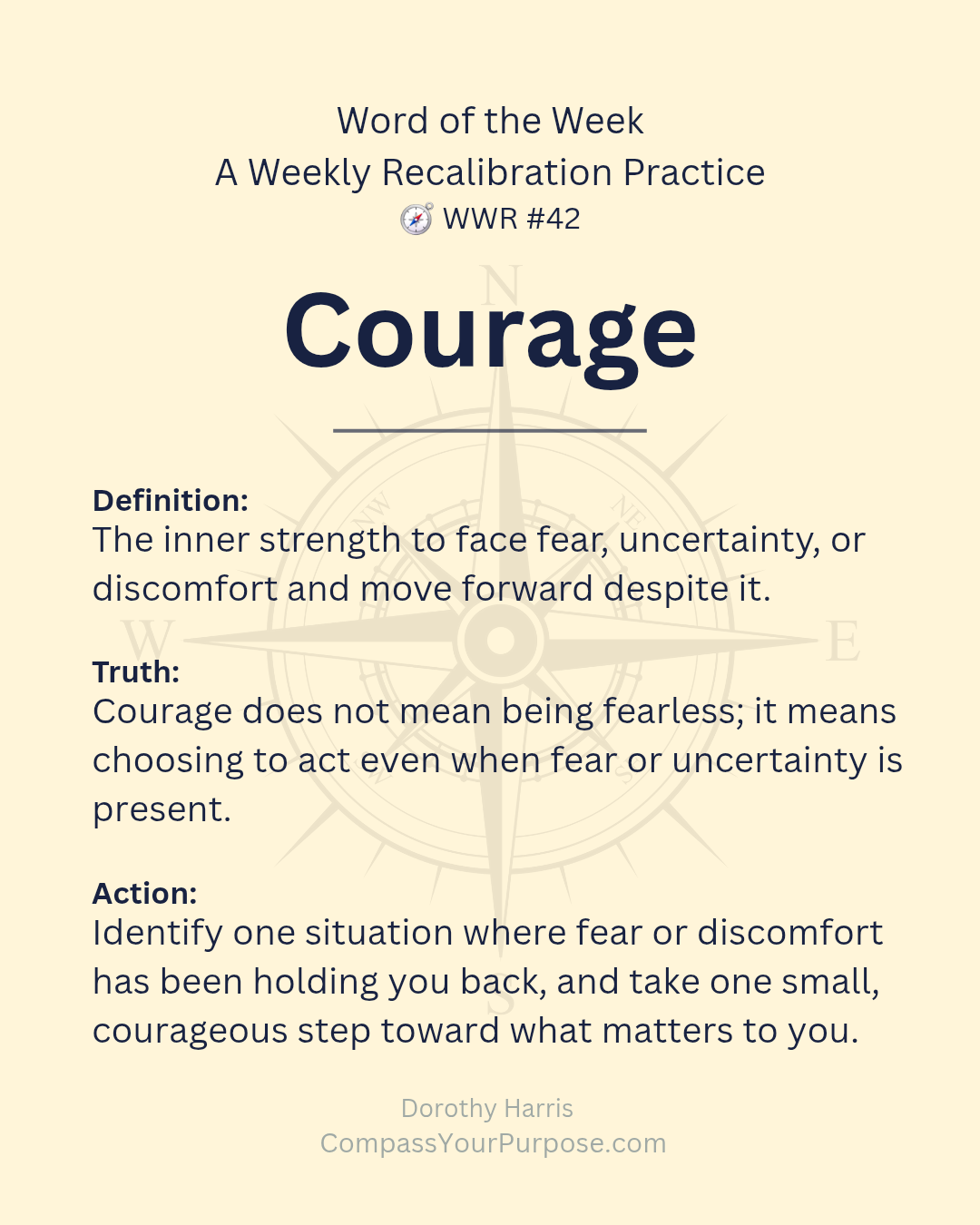
Word of the Week
Week #42
Courage
Courage reminds us that moving forward doesn't always mean feeling confident, certain, or unafraid. Sometimes the decisions that matter most to us are accompanied by fear, uncertainty, or discomfort. We may hesitate to have an important conversation, pursue an unfamiliar opportunity, establish a personal boundary, or make a change we've been considering for some time. It's natural to want reassurance before taking action, but we don't always have the answers or confidence we're hoping for. Courage invites us to recognize that fear doesn't necessarily mean we're incapable of moving forward. Sometimes it simply means we're facing something unfamiliar, meaningful, or uncertain.
It's easy to associate courage with extraordinary acts of bravery, but courage can also appear in the quieter moments of everyday life. It may involve acknowledging something we've been avoiding, asking for help, expressing an honest opinion, or taking responsibility for a choice we wish we'd made differently. Sometimes courage means taking action, while other times it means recognizing that we need to pause, reconsider, or choose a different direction. Being courageous doesn't require us to ignore our fears or disregard genuine risks. It involves becoming aware of what we're experiencing, understanding what matters to us, and making thoughtful choices rather than allowing fear alone to determine our direction. Each small, intentional step can help us develop greater self-trust as we learn to navigate uncertainty.
This week invites us to identify one situation where fear or discomfort may be holding us back from something meaningful. Consider what you've been hesitant to address, explore, or change. What concerns are influencing your decision? Are they pointing toward something that deserves careful consideration, or are they assumptions that might benefit from a different perspective? You don't have to overcome every fear or make a dramatic change today. Perhaps your courageous step is asking a question, having a conversation, gathering information, or taking one manageable action toward something that matters to you. Courage isn't necessarily about eliminating fear before we begin. Sometimes it's about recognizing that we can acknowledge our fear, consider our choices, and still move forward with intention. 🧭💛
Missed a week? Explore the full Word of the Week Archive.

Begin Your Reset
Not overnight. Just a shift.

You don’t have to quit everything.
You can begin by gently pulling back.

If you’re just beginning, start here—with something simple and supportive.